
Microchip MCP130T-300I/TT Supervisor Circuit: Features and Application Design Guide
In the world of embedded electronics, ensuring a microcontroller starts correctly and operates reliably under unpredictable power conditions is paramount. The Microchip MCP130T-300I/TT is a robust voltage supervisor IC designed specifically to fulfill this critical role. This article explores its key features and provides essential guidance for its integration into circuit designs.
Core Features and Operational Principle
The MCP130T is a member of Microchip's extensive family of microprocessor supervisory circuits. Its primary function is to monitor the voltage of the power supply (VDD) to a microcontroller (MCU) or other digital logic. The "300" in its part number denotes a fixed voltage threshold of 3.00V.
The device operates on a straightforward principle:
1. It continuously compares the supplied VDD against its internal 3.00V reference.
2. When VDD falls below the threshold, the IC asserts a reset signal (pulls the RESET pin low).
3. It continues to hold the MCU in reset until VDD rises above the threshold and remains stable for a fixed timeout period of 300ms (typical). This delay ensures the power supply and system clock have stabilized before the MCU begins executing code.
Key standout features include:
Precision Voltage Monitoring: The device offers high accuracy in voltage detection, ensuring the MCU is only active within its specified operating voltage range, preventing erratic behavior and data corruption.
Manual Reset Input: An additional MR (Manual Reset) pin allows an external switch or another circuit to force a system reset, adding flexibility for user-initiated or external hardware-triggered resets.
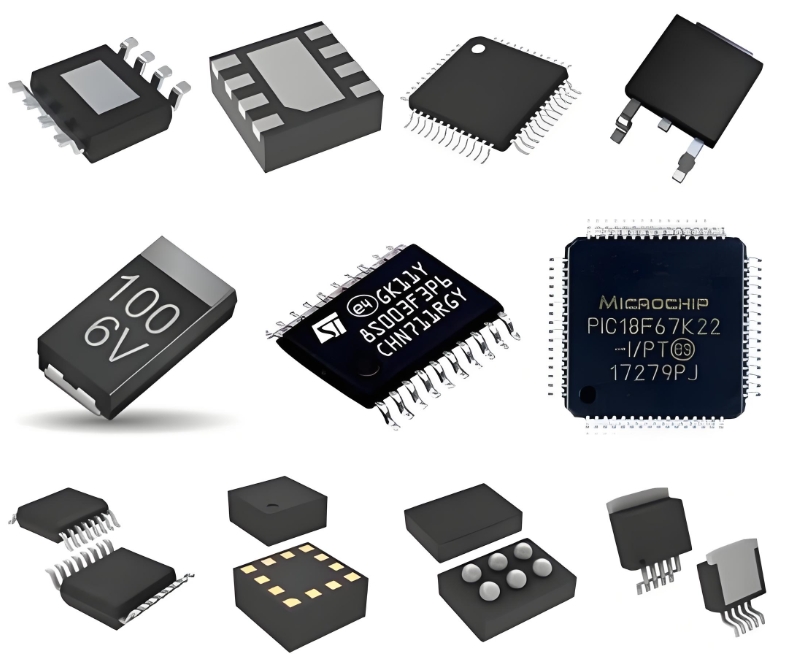
Small Form Factor: Housed in a space-saving SOT-23-3 package, it is ideal for compact and portable applications where board real estate is limited.
Low Power Consumption: The device itself consumes very little current, minimizing the load on the power supply it is monitoring.
High Noise Immunity: Designed to ignore fast, transient glitches on the power supply line, preventing unnecessary reset signals.
Application Design Guide
Integrating the MCP130T-300I/TT into a design is typically straightforward. Here are the key considerations for a successful implementation:
1. Basic Connection:
Connect VDD pin to the power supply rail you wish to monitor (e.g., the MCU's 3.3V rail).
Connect GND to the common ground.
Connect the open-drain RESET output pin directly to the MCU's active-low reset pin (nRST, /RESET). A pull-up resistor (typically 10kΩ) is required on this line to VDD to ensure a valid high logic level when the reset is not asserted.
2. Manual Reset Function:
The MR pin is an active-low input. To utilize it, connect one terminal of a tactile switch to MR and the other to GND. A series resistor (1-10kΩ) is recommended to limit current when the button is pressed. An internal pull-up resistor eliminates the need for an external one on this pin.
3. Decoupling and Layout:
For optimal noise immunity, place a 100nF ceramic decoupling capacitor as close as possible to the MCP130T's VDD and GND pins.
Keep the trace from the RESET pin to the MCU's reset pin short to avoid noise pickup which could inadvertently trigger a reset.
4. Typical Use Cases:
Microcontroller Power-On Reset (POR): The most common application, ensuring valid startup.
Brown-Out Protection: Safely shutting down the system during a power failure or sag.
Battery-Powered Devices: Monitoring battery voltage to prevent operation at damagingly low levels.
Industrial Control Systems: Providing enhanced reliability in electrically noisy environments.
The Microchip MCP130T-300I/TT is an exceptionally reliable and simple-to-use solution for safeguarding microcontroller-based systems. Its precision monitoring, integrated time delay, and manual reset capability make it an indispensable component for designers striving to achieve maximum system robustness and reliability in a minimal footprint.
Keywords: Voltage Supervisor, Microcontroller Reset, Brown-Out Protection, Power Management, Reliability.

